Ia-ți timp. Dă-ți timp
E ora 1 noaptea. După ce mi-am culcat copiii, am terminat orele la lucru pe ziua de azi, iar acum coc o pâine și scriu aici. M-am întors.
În lunile ianuarie și februarie am fost plecată parcă în jurul lumii, chiar dacă a fost doar o lume interioară, intelectuală. Mai precis, am fost în se-siu-ne. Da, ca pe vremuri, zic la cei 35 de ani ai mei – dar la a doua facultate. M-am cufundat în învățat ca în adâncuri de mare, cu totul. (Am avut acest privilegiu, grație “echipei de suport” de acasă, adică tati și bunica lor, cei care au ținut sus trupa de toddleri cât timp mami a fost lângă ei doar cu 3/4 normă.)
Pentru mine, de fapt, imersiunea aceasta în studiu e ca un cer aprins, cu mii de stele, în care mă pierd voit; tot atâtea noi conexiuni informaționale simt că mă activează într-un mod aproape extatic, la fiecare astfel de încordare bi-anuală.
Proiecte semestriale la fiecare materie – bun. Săptămâni de învățat intensiv – bun. Trei weekenduri de navetă Timișoara-Cluj pentru examene, bun. Totul gata cu tradiționalul burnout post-sesiune? Nu. Nu și de data asta.
În această “pauză” de vreo două luni, nu am mai scris, nu am mai postat, nu am mai existat practic în online, pentru că mi-am evaluat la sânge prioritățile. Fiecare sfert de oră contează, când ești mamă cu doi copii mici, cu lucru, treburi ale casei și învățat. Iar după maratonul universitar, a trebuit, neapărat, să vină și o perioadă de odihnă, pe care acum chiar am reușit să mi-o acord. Sunt conștientă, însă, că este foarte neobișnuit acest lux al ruperilor de rutină, al dispariției, al oferirii de timp ție însuți.
Acum, că am revenit, aș vrea să vorbesc despre spațiul negativ. Despre ce înseamnă tăcere versus gol, pentru că nu sunt nici pe departe identice, nici măcar asemănătoare.
Viața se întâmplă în spațiul negativ dintre momentele public vizibile. Este o succesiune de episoade discrete, cu infinit mai multe nuanțe decât pot fi afișate și receptate de altcineva.
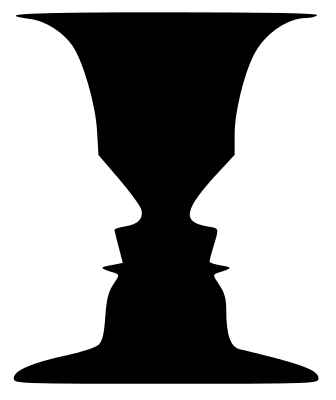
Mintea noastră are probleme în a percepe lucrurile discrete (discontinue) și forțează continuitatea. Trasăm contururi mentale acolo unde ele nu există. Este un mecanism de supraviețuire. Cel mai probabil, dacă strămoșii noștri s-ar fi lăsat purtați de fascinația pentru minunatele detalii de pe blana unui jaguar și n-ar fi reușit să identifice întregul, adică animalul însuși pe cale să atace, nu mulți am mai fi fost acum, aici.

Problema este că noi vedem întregul chiar și acolo unde nu e nevoie. Interpretăm o succesiune de imagini fericite ca pe o viață fericită, și o succesiune de tăceri ca pe semnul unei probleme. Uneori, e așa; alteori, probabil de cele mai multe ori, nu.
Ne vine ușor, firesc și e chiar inevitabil să creăm scenarii din episoade separate, “umplând” spațiile goale cu ceea ce pare mai logic în context. Aceasta este de fapt esența managementului imaginii din PR și marketing. Ceea ce postează o persoană sau un brand pe social media ajunge să îi definească existența, una paralelă cu viața reală. Miezul acestei vieți secundare este că , prin ochii altora, lucrurile sunt mult mai simple și mai inteligibile decât în complexitatea incomodă a vieții reale. Încropim noi rapid o poveste din semnalele separate pe care le vedem ocazional, din acele câteva piese de puzzle pe care ne grăbim să le asamblăm într-o aparentă logică – un eveniment, o sărbătoare, un portret de familie, o melodie, o carte. Gata! Avem senzația că totul ne e cunoscut privind persoana, și tindem să persistăm în convingeri cu o stabilitate de invidiat. Ba chiar mai mult, persoanei înseși ajunge să i se pară că viața sa nu e în regulă, de vreme ce ea nu poate fi redusă la acele “picture-perfect moments” pe care cei din jur le aclamă, le validează și le doresc.
Am și eu tendința asta, bineînțeles. Să vreau ca mereu să emit, pentru a se considera că exist. Era un timp în care toate lucrurile din viață își aveau echivalentul lor pe Stories sau în feed. Probabil că se simte încă amprenta preocupării mele obsesive pentru muncă din primii 10 ani de carieră. Îmi spuneam atunci că trebuie să fii prezent ca să contezi, să-ți spui povestea căci altfel se scrie ea de la sine într-un mod indezirabil – toate acestea făcând deseori abstracție de realitatea propriilor resurse care deseori se epuizau în proces. Vrei să fii văzut, vrei să contezi, confunzi asta cu conexiunea. Dar apoi, am obosit, de-adevăratelea. Am rărit emisia. Și, ce să vezi? Încă exist. Și ce dacă povestea se scrie de la sine? Este ok așa. De fapt, abia acum simt că încep, cu adevărat, să trăiesc în mod echilibrat.
Căci oare unde punem firimiturile dintre pozele perfecte? Tăcerile? Pauzele? Detaliile? Viața tinde să se petreacă și în ele… sau mai ales în ele.
Mie, tăcerea mi se pare mai interesantă decât o mie de imagini. E respirație umană în ea. Ce ai făcut când ai tăcut? O întrebare de 1000 de puncte. Nu e mereu ceva de povestit acolo, însă gândirea în nuanțe și detalii este întotdeauna mai aproape de adevărul cel adevărat decât echivalentul ei schițat și stereotipizat.
Pâinea ia timp. Nașterea ia timp. Formarea în psihologie (sau orice alt domeniu serios) ia timp. Schimbarea, vindecarea, creșterea, copiii, iubirea, prietenia, găsirea sensului – toate iau timp. Toate rezultă dintr-un amestec de muncă și odihnă, de activare și repaus.
A fi prezent pentru tine și cei dragi nu e echivalent cu a fi permanent în priză, ci cu acceptarea firescului acestor contraste de conexiune-deconectare. Celor mici le e foarte util să vadă că și părinții lor mai au momente în care viața lor se petrece în altă parte, dar din care mereu vor reveni cu iubire și atenție către ei. A învăța, treptat, deconectarea fără teamă este o probă a iubirii trainice și a dezvoltării atât de necesarei toleranțe la frustrare.
Printre puținele expresii cu formă opusă și același sens este și perechea “ia-ți timp” - “dă-ți timp”. Deci, asta vă doresc, ne doresc. Chiar dacă e (doar?) timp de respirat. Cu aer bun, de primăvară, să ne fie!
Take Your Time. Give Yourself Time
It's 1 o'clock in the morning. After putting my kids to bed, I finished my work hours for the day, and now I'm baking a loaf of bread and writing here. I returned.
In January and February, I was away seemingly around the world, even if it was only an inner, intellectual world. More precisely, I was in the exam session. Yes, the 35-year-old me takes exams like in the old days – but at my second university. I immersed myself in learning like in the depths of the sea, completely. (I had this privilege, thanks to the "support team" at home, that is, dad and their grandma, who took care of the band of toddlers while mom was with them only three-quarters of the time.)
For me, this immersion in study is like a burning sky, with thousands of stars, in which I lose myself; so many new informational connections activate me almost ecstatically with each bi-annual effort of this sort.
Semester projects in each subject - good. Weeks of intensive learning – good. Three weekends of commuting Timișoara-Cluj for exams, good. All done with the traditional post-session burnout? No. Not this time.
During this "break" of about two months, I didn't write anymore, I didn't post anymore, I didn't practically exist online anymore, because I evaluated my priorities to the bone. Every quarter of an hour counts when you are a mother with two young children, with work, housework, and studying. After the university marathon, there had to be a period of rest, which I have now really managed to give myself. However, I am aware that this luxury of breaking routine, disappearing, and giving yourself time is very unusual.
Now that I'm back, I want to talk about negative space. What silence versus emptiness means is that they are nowhere near identical or even similar.
Life happens in the negative space between publicly visible moments. It is a succession of discrete episodes with infinitely more nuance than anyone can display and receive.
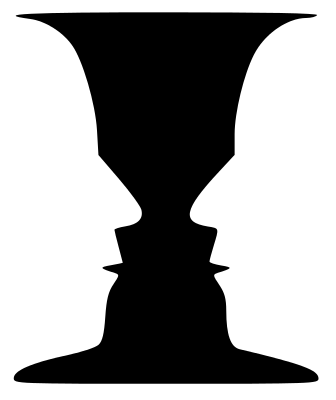
Our mind has trouble perceiving discrete (discontinuous) things and forces continuity. We draw mental contours where none exist. It's a survival mechanism. Most likely, if our ancestors had been fascinated by the beautiful details of a jaguar's fur and failed to identify the whole, that is, the animal itself about to attack, only a few of us would be here now.

The problem is that we see the whole even where we don't need to. We interpret a sequence of happy images as a happy life and a sequence of silences as a sign of trouble. Sometimes, it is; other times, probably most of the time, not.
It comes easy, natural, and even inevitable to create scenarios from separate episodes, "filling" the empty spaces with what seems more logical in the context. This is the essence of image management in PR and marketing. What a person or a brand posts on social media defines their existence, one parallel to real life. The core of this second life is that, through the eyes of others, things are much simpler and more understandable than in the uncomfortable complexity of real life. We quickly piece together a story from the separate signals we occasionally see, from those few puzzle pieces we rush to assemble into an apparent logic—an event, a holiday, a family portrait, a song, a book. Ready! We feel that everything is known about the person and tend to persist in our beliefs with enviable stability. Even more, it seems even to the person that their life is improper since it cannot be reduced to those "picture-perfect moments" that those around them applaud, validate, and wish for.
I have that tendency, too, of course. To want always to say something, to be considered to exist. There was a time when everything in life had its equivalent in Stories or feeds. It's probably still the imprint of my obsessive preoccupation with work from the first ten years of my career. I used to tell myself then that you have to be present to matter to tell your story because otherwise, it writes itself in an undesirable way - often ignoring the reality of one's resources that were frequently exhausted in the process. You want to be seen; you want to matter; you confuse that with connection. But then, I got really tired. I showed myself more rarely. And what do you know? I still exist. And what if the story writes itself? It's OK like this. It is only now that I feel that I am starting to live in a balanced way.
Where do we put the crumbs between the perfect pictures? The silences? The breaks? The details? Life tends to happen in them, too... or mostly in them.
I find the silence more interesting than a thousand images. There's human breath in it. What did you do when you were silent? A question of 1000 marks. There is not always something to tell, but thinking in nuances and details is always closer to the absolute truth than its sketchy and stereotyped equivalent.
Bread takes time. Birth takes time. Training in psychology (or any other serious field) takes time. Change, healing, growing up, raising children, living your love, maintaining friendships, finding meaning - all take time. All result from a mixture of work and rest, activation and pauses.
Being present for yourself and your loved ones is not equivalent to being permanently plugged in, but to accept the naturalness of these connection-disconnection contrasts. It is beneficial for the little ones to see that their parents also have moments when their lives are spent elsewhere, but from which they will always return with love and attention to them. Gradually learning to disconnect without fear is a test of enduring love and developing much-needed frustration tolerance.
Among the few expressions with the opposite form and the same meaning is the pair "take your time" - "give your time." So this is what I wish for you; I wish for us. Even if it's (just?) time to breathe with good spring air, let's have it!